Monday, 21 September 2015

The Failure of Society

"Everyman" portrays generalisations of traits that still exist in the modern world. A successful allegory about the failures of morality, the character Everyman is an obnoxious whiny character who is so bigheaded he can't see past his own misfortune. Whether the anonymous author was trying to accomplish a character this obnoxious isn't wholly relevant, regardless of his intentions he did.
To strip down what each character was saying could potentially equate to a teenage boy being drafted to war. A whiny man who feels the world is out to get him and is setting him up to fail. Of course the safest way to fail is to do it with friends, because really, if someone else fails too its not your fault right?
Wrong.
This play could find success today among crowds of people who need reassurance that they aren't the only ones who feel the world spites them. However, it would be horribly ridiculed by several religious groups. To open up a play that will have several references to Jesus Christ, Mary, and other Saints with a portrayal of God as weak and whiny is not the strongest plan. Right on page one God is quoted explaining all the wondrous deeds he performed. From "heal[ing] their feet" to "shedding of [his own] blood" (1) God felt as if he succeeded and it was his angels and the people that were unkind and blind.
Everyman was a character that could have portrayed the grouping together of the general population, unfortunately, complaints are heard louder than compliments. A fair 98% of what Everyman says is a complaint or excuse. From a cramped toe (11) to his 'friends' forsaking him, Everyman is challenged with his insolent personality affecting his relations with others.
"Everyman" reminded me of a poorly written Inferno with less inspiring character development. The protagonist of a story can be as hated as Dante and Everyman or as loved as Harry Potter but it is not often that we see a hero as weak as Everyman.

True heroes stay strong in the darkest of times. What is Everyman's excuse? Better yet, what is societies excuse?

Thursday, 17 September 2015

The Source of Evil

The Wife of Bath's tale is a satirical portrayal on the importance of women. Chaucer uses a young knight to embody the goals, ambitions, and desires. Similarly to most young men, especially those with power, he sought a young beautiful woman. However, because of his indiscretions the knight found himself on a quest to discover the true desire of a woman. Along this quest the knight spoke to many young women and none could agree on an answer, eventually he stumbles upon an old woman who would tell the knight the answer he sought, as long as he would marry her. 
After much debate and deliberation the knight marries the old woman. The woman is important because she has a different perspective than most Medieval heroes. She even goes as far as to change the story of King Midas from Greek Mythology to paint women in a negative light. 
Women in medieval times were valued for their beauty above all else. Chaucer sent a knight who raped a beautiful maid out on a quest to talk to other young women. Eventually the knight stumbled upon an old hag who helped him. In return, the old woman demanded for the knights hand in marriage. The knight begrudgingly kept his word and married the hag, but did not want to consulate the marriage. He believed that she was old and ugly and poor so could never truly please him. Once she explains herself he is willing to settle for her, and in return for his commitment she becomes "young and lovely, [and] rich in charms" (292). Once she was young and beautiful she could "give him pleasure" (292). 
This is disgustingly sexist. It sets the stage for a woman only being able to satisfy a man if she meets his preference, in the case of this young knight it is possible since he seems to be a preferential rapist, but once he gave into her ugliness she rewarded him with beauty. Medieval women were formed to spend their time beautifying themselves, to please and to be loyal to their husbands. The wife of bath partially challenges this by demanding his respect and to dominate rather than be dominated. But ultimately she did succumb to the mans desires.

Thursday, 10 September 2015

Mystical Aphorisms of the Fortune Cookie

Chaucer wrote his tales of the pilgrimage a thousand years ago. 
Even in the prologue the reader can identify when Chaucer is building a character up and when he is going to use comedy to tear it down. Justice Antonin Scalia approaches his opinions in a similar way. Scalia uses comedic or satirical phrases to ridicule an argument. However, similarly Chaucer would say something almost nice and then end the line with a tongue and cheek comeback. This is displayed in the prologue when Chaucer compares the knight to his son, the squire. When Chaucer makes subtle comments about the knights horses but also his dirty clothes, or the squires pressed hair, he brings subtle digs at sexuality and wealth without being overly offensive. 
Chaucer set the precedent for a justifiably nice sentence, with maybe two words that seem nice but their tone changes the meaning being deemed okay. Scalia follows this guideline in his opinions, he will write a seemingly nice or well composed paragraph with a random line that edges on randomly inappropriate, but as a whole brings a comedic aspect to the long article. 

Thursday, 3 September 2015

Confident or Cocky

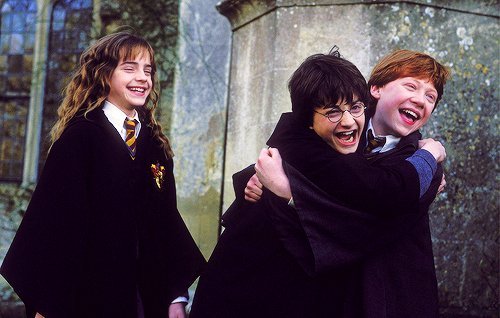
The ultimate hero indisputable in my mind was Harry Potter. Leader of the golden trio, the chosen one, a bad ass who defeats every monster in his path, and still humble. Harry has no clue what goes on in his world, the wizarding or the muggle world, and he just goes along with whatever happens.
A much as I would like to give J.K. Rowling all the credit for this beautiful creation, I can't. So many of the topics or characters that she bestowed in the magical series stemmed from Beowulf.
So much of Beowulf is about lineage, and although in Harry Potter Hermione is awesome and a muggle born, that plays an important role. Harry will always look just like James but with Lily's eyes, and Beowulf just can't seem to start speaking without being proclaimed "Ecgtheow's son." (Like seriously what's up with that you slayed a freaking dragon, and two other unbeatable beasts and you still have to live in you father's shadow?)
Another important part of Beowulf is his wyrd or his fate, in almost a predestined way the world has created what it wants for Beowulf. For Harry Potter there is a mystical orb that proclaims that he must be willing to die, for Beowulf his sword "failed when he unsheathed it."Each hero has to deal with what comes his way and both are given a death sentencing challenge.
De ja vu hmm it seems like I have read to this fight before? Both heroes fight pretty much the same battle. Several times. Thank you mysterious author for teaching modern authors that you don't have to come up with new innovative ideas to have a best seller.
For every similarity between the two books (and there are many many more) there is one major difference. Harry Potter is confident, but faces challenges that humble him. HP would not have survived book one had it not been for his two friends and hell of a lot of luck. He has to acknowledge his limitations and be willing to ask for help in order to succeed. Beowulf is not as likeable. His fatal flaw is hubris, and there is no escaping his encompassing skill in his opinion.
Remember to ask for help and not act like a pompous jerk. That is not a way to make friends, unless of course you don't care, in which case continue on your merry way.